
Every year, as summer begins to creep across India, thousands of travellers start asking the same question: “Can I visit Ladakh in May?”
The short answer is yes — and for many travellers, May is not just a good time to visit Ladakh. It is the best time.
But let us unpack that carefully, because Ladakh in May is not the same experience as Ladakh in July or August. The landscape is different, the crowds are different, and the energy of the place is entirely its own. This guide will tell you exactly what to expect, what to plan for, and why a carefully planned May trip to Ladakh could be one of the most unforgettable journeys of your life.
Why Everyone Asks: “Is May Too Early for Ladakh?”
The confusion is understandable. Ladakh sits at an average altitude of over 3,500 metres above sea level. Its mountain passes — Khardung La, Chang La, Zoji La — can reach as high as 5,000 to 5,600 metres. For most of winter and early spring, these passes are completely snow-covered and inaccessible by road.
So the anxiety is real: Will the passes be open? Will the roads be safe? Will there be anything to see?
Here is what the season actually looks like:
- January to March: Most high-altitude passes are closed. Only Leh city is accessible by air.
- April: Roads begin to open cautiously. Pangong Lake is still very cold. The season is just warming up.
- May: This is the opening month. Khardung La — the gateway to Nubra Valley — typically opens in early May. Chang La, the route to Pangong, follows shortly after. The landscape is dramatic and snow-dusted. Hotels are open, flights are running, and the season is officially under way.
- June to August: Peak season. More accessible, but also more crowded and more expensive.
- September to October: The second sweet spot — clear skies, autumn colours, quieter roads.
So May is not too early. It is the opening act — and sometimes the opening act is the one worth seeing.
What Ladakh Looks Like in May
Imagine a landscape that has been asleep under snow for five months. In May, Ladakh is waking up.
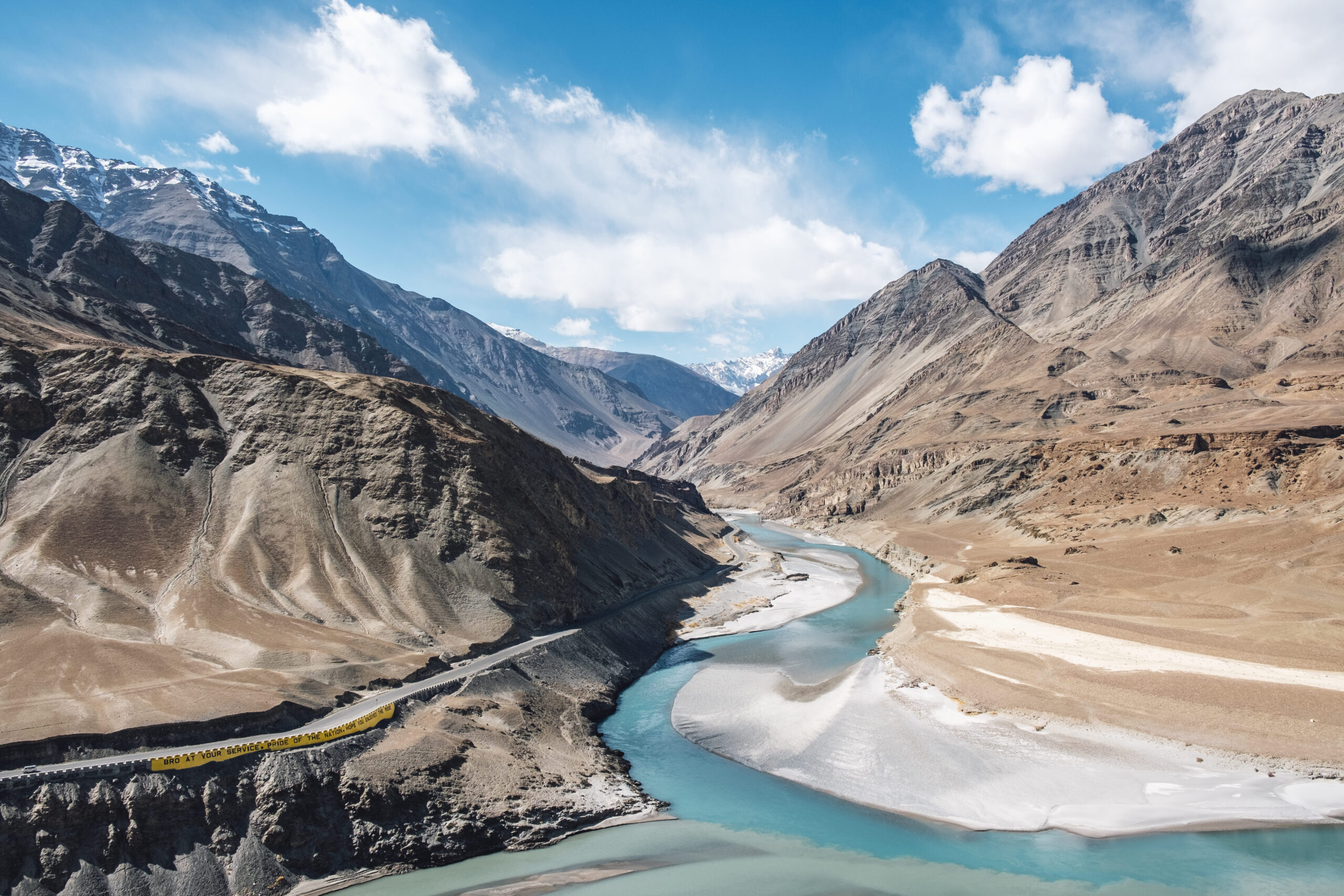
The valleys are still bare and golden-brown, but patches of snow cling to the mountain ridges like brushstrokes on a painting. The sky is a shade of blue you will not find anywhere else in India — sharp, deep, almost surreal at altitude. The Indus and Shyok rivers are running full from snowmelt, their turquoise waters cutting through rocky terrain that looks more like the surface of the moon than any place you have been before.
It is raw. It is vast. It is extraordinarily beautiful.
The famous apricot blossoms — Ladakh’s brief and beloved spring — typically appear in April and early May in the lower valleys around Leh. If your timing is right, you may catch the last of them: white and pink against grey mountains, one of the most striking natural contrasts in all of India.
Wildlife is also more active in May. Snow leopards, though elusive, are more likely to be spotted at lower altitudes before they retreat to higher elevations as summer progresses. Migratory birds begin arriving at Pangong Lake — the bar-headed geese that cross the Himalayas are one of nature’s most astonishing sights.
The Roads and Passes: What Is Typically Open in May
This is the practical question every traveller needs answered.
Leh city is accessible by air throughout the year via Kushok Bakula Rimpochee Airport, with regular flights from Delhi, Mumbai, and other major Indian cities.
Khardung La Pass (5,602 metres) — the world’s one of the highest motorable roads and the gateway to the stunning Nubra Valley — generally opens to vehicles in the first or second week of May, depending on snowfall that year. By mid-May it is reliably open.
Chang La Pass (5,360 metres) — the route to Pangong Tso — typically opens slightly later, usually by mid to late May.
Manali–Leh Highway via Rohtang and Baralacha La usually opens in late May or early June. So if you are planning a road trip from Manali to Leh, plan for the second half of May at the earliest, and always verify current road conditions before setting off.
The key takeaway: a flight into Leh, combined with jeep excursions to Nubra and Pangong, is the most reliable and rewarding way to experience Ladakh in May.
May Weather in Ladakh: What to Pack
Ladakh in May has a wide daily temperature range. Days are pleasantly warm in Leh town — temperatures can reach 15°C to 18°C in the afternoon. Evenings and early mornings, however, drop sharply. At higher altitudes like Nubra Valley and Pangong Lake, nighttime temperatures can fall to 0°C or below.
Pack for all seasons within a single day:
- Thermal inner layers
- A good fleece mid-layer
- A windproof and waterproof outer jacket
- Comfortable trekking trousers
- Sturdy, broken-in shoes with ankle support
- Sunscreen with SPF 50+ (the UV radiation at altitude is intense)
- Sunglasses — polarised and high UV-protection
- Lip balm and moisturiser (the air is very dry)
- A warm hat and gloves for evenings and early mornings
Altitude Sickness: The One Thing You Must Take Seriously
No guide to Ladakh in May is complete without an honest conversation about Acute Mountain Sickness (AMS).
Leh sits at approximately 3,524 metres above sea level. When you arrive — whether by flight from Delhi or by road — your body needs time to adjust to the reduced oxygen levels. Rushing straight into sightseeing or excursions can result in headaches, nausea, dizziness, and in serious cases, more dangerous conditions.
The golden rule: rest completely on your first day in Leh. Do not skip this. No matter how much energy you feel, do not hike, do not exert yourself, and drink plenty of water.
A well-designed itinerary builds this acclimatisation day into the plan. On Day 1, you rest and perhaps take a gentle, unhurried walk to Leh Palace or Shanti Stupa — nothing strenuous. By Day 2, your body is ready to begin the real adventure.
If you feel severe symptoms, descend to a lower altitude immediately and seek medical help. Ladakh’s district hospital and many clinics in Leh are experienced in treating AMS.
What You Can See and Do in May
Despite being the season’s opening month, a 5-day trip to Ladakh in May gives you access to Ladakh’s most iconic experiences.
Leh City and Surroundings
Leh Palace — modelled on the Potala Palace in Tibet and built in the 17th century — towers over the old town. Shanti Stupa, the white Buddhist dome on a hilltop above the Chanspa neighbourhood, offers one of the most memorable panoramic views in India. The Leh Bazaar is alive with colour, local crafts, and the best butter tea you will ever taste. The Sangkar Monastery nearby is serene and rarely crowded.
Nubra Valley via Khardung La
Crossing Khardung La — one of the highest motorable roads on the planet at 5,602 metres — is an experience that stays with you. The descent into Nubra reveals a landscape of extraordinary contrasts: snow-capped peaks giving way to a broad, river-carved valley that somehow contains sand dunes. At Hunder, double-humped Bactrian camels roam the dunes in the shadow of the Karakoram range — a sight so improbable it feels like a dream. The Deskit Monastery, perched dramatically on a hilltop, is one of the valley’s great highlights.
Pangong Lake
At 14,000 feet and stretching 136 kilometres in length — with over half of it lying within Chinese territory — Pangong Tso is among the most beautiful lakes in the world. The water changes colour through the day, shifting from blue to turquoise to deep green as the light moves. In May, the edges may still carry thin ice in the mornings. Migratory birds are just arriving. You may have entire stretches of the shore entirely to yourself — something that becomes impossible in July.
The journey to Pangong crosses Chang La Pass and passes through the traditional villages of Shyok, Durbuk, and Tangtse, each a small world of its own.
Why May Is Actually a Hidden Advantage
Here is the honest truth that experienced Ladakh travellers will tell you: peak season crowds in Ladakh are significant.
In July and August, the Manali–Leh highway is packed with motorcycle convoys, Pangong Lake is ringed with luxury camps and selfie-seekers, and hotel prices are at their highest. The queues at Khardung La for photographs can stretch for an hour.
In May, almost none of this applies. The tourists who arrive in May are typically experienced, independent-minded travellers who understand the conditions. Hotels are fresher and more attentive at the start of the season. Prices are lower. The roads are quieter. The monasteries feel genuinely contemplative.
You trade some accessibility — the Manali road may not be open, some remote treks are not yet possible — for something far more valuable: space, silence, and the feeling of a place that is not yet performing for a crowd.
A 5-Day Ladakh Glance: The Ideal May Itinerary
If you are planning your first Ladakh trip — or if you have limited time and want to see the best of it without rushing — a structured 5-day, 4-night journey is the smartest approach.
The Ladakh Glance package from Great India Tour Company is built exactly around this logic.
Over five days, you arrive in Leh, acclimatise properly (Day 1), cross Khardung La to explore the Nubra Valley and Deskit Monastery (Day 2), journey to the shores of Pangong Lake by way of the traditional Shyok–Durbuk route (Day 3), return to Leh via the spectacular Chang La Pass (Day 4), and depart with memories that will last a lifetime (Day 5).
The itinerary includes accommodation on a twin-sharing basis, breakfast each morning, guided service, all sightseeing, entrance fees, and comfortable air-conditioned vehicles throughout. Everything is handled. You simply show up at Leh Airport, and the journey begins.
The package covers:
- Leh Palace and Shanti Stupa sightseeing
- Khardung La crossing and Nubra Valley exploration
- Deskit Monastery visit
- Optional Bactrian camel safari at Hunder (on direct payment)
- Pangong Tso Lake stay and exploration
- Chang La Pass crossing on the return
It is the complete Ladakh experience, thoughtfully paced, professionally managed, and perfectly timed for a May departure.
👉 Explore the Ladakh Glance Package on GITC
Who Is Ladakh in May Best For?
First-time Ladakh visitors who want to experience it before peak season takes over. May gives you the full experience — Nubra, Pangong, Leh — without the peak-season pricing or crowds.
Photographers and nature lovers who want dramatic light, snow-dusted peaks, and the chance to photograph an uncrowded Pangong Lake.
Couples and small groups who want an adventure that feels intimate rather than touristy.
Summer vacation planners whose children have school holidays from May onwards — Ladakh is safe and deeply memorable for families with older children and teenagers.
Anyone who has already done Goa, Kerala, Rajasthan, or the usual summer circuit and is ready for something that challenges and transforms.
A Few Practical Tips Before You Go
Book your flights early. Leh is a small airport and seats fill up fast once the season opens. Book at least 6–8 weeks in advance for May travel.
Carry cash. ATMs in Leh can run dry during peak days. Bring enough cash for personal expenses, optional activities, and emergencies.
Get an inner line permit. Nubra Valley and Pangong Lake require Protected Area Permits. These are typically arranged through your travel operator — confirm this when booking.
Travel with a reputable operator. Ladakh’s roads at altitude can be unforgiving. A professional, experienced tour company that knows the routes, the hotels, and the contingency plans makes all the difference. Great India Tour Company has been operating Ladakh tours for years and has the local knowledge and trusted networks to ensure your journey runs smoothly.
Take out travel insurance. Unexpected road closures, medical situations at altitude, and flight disruptions do happen. Good travel insurance is not optional in Ladakh — it is essential.
Final Verdict: Is May Too Early for Ladakh?
Not at all. May is the beginning — and beginnings in Ladakh are spectacular.
You get the same Pangong Lake, the same Khardung La, the same monasteries and mountains that everyone goes to see. But you get them in quieter, cleaner, more personal form. The season is fresh, the landscape is dramatic, and the whole journey feels a little more real.
If you have been putting off Ladakh because the timing never felt right, May is your answer.
Let Great India Tour Company take care of the planning. Their Ladakh Glance package is designed for exactly this kind of trip — compact, well-paced, and covering everything that matters. All you need to do is book your flights, pack your layers, and say yes to one of India’s greatest adventures.
👉 View the Ladakh Glance Package and Book Your May Trip →
For enquiries and custom Ladakh packages, contact Great India Tour Company at holidays@gitctour.com or call +91 484 2864210 / +91 9995801041. Our travel experts are ready to help you plan the perfect Ladakh experience.